
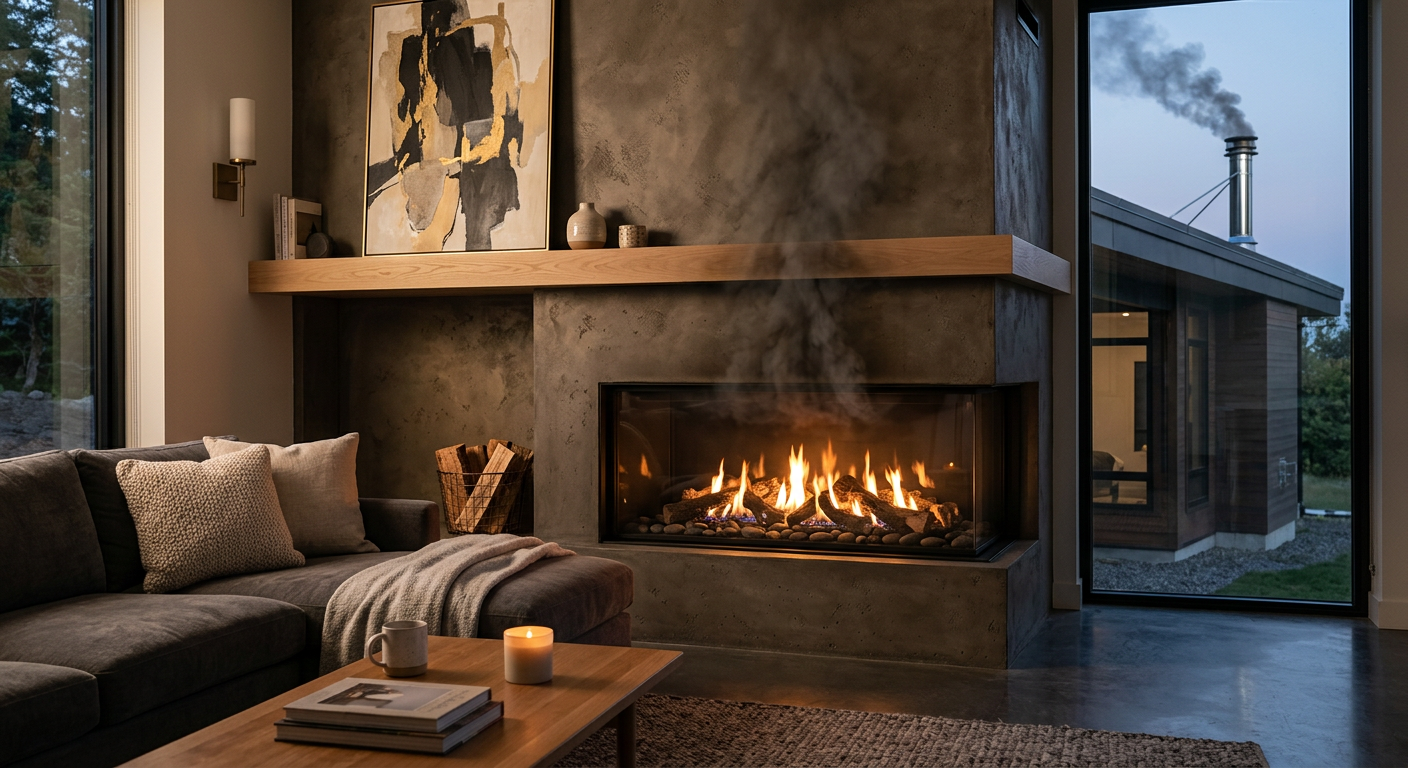
There’s nothing quite like enjoying a warm fire on a chilly evening, especially when temperatures start to drop across Peachtree City and the surrounding Georgia communities. But when smoke starts drifting into your living room instead of traveling up the chimney, that cozy experience can quickly become uncomfortable.
If you’ve noticed fireplace smoke in house or a lingering smoky smell after lighting a fire, something may be interfering with your chimney’s ability to vent properly. While some causes are relatively simple, others can point to a blockage, ventilation issue, or damage that needs professional attention.
One of the first things to check when smoke enters your living space is the fireplace damper. This metal plate sits inside the chimney and controls airflow between your fireplace and the outside.
Before starting a fire, the damper needs to be fully open so smoke and combustion gases can travel safely up and out of the chimney. If it is closed or only partially open, smoke may have nowhere to go except back into your home.
Damper problems can also develop when components become damaged, rusty, or difficult to operate over time.
What to do: Before lighting a fire, confirm that the damper is fully open. If it feels stuck, won’t stay open, or appears damaged, avoid using the fireplace until it has been inspected.
Your chimney needs a clear passage for smoke to escape. Unfortunately, that passage can become restricted by soot, creosote, leaves, animal nests, and other debris.
Creosote is a combustible substance that forms as wood smoke cools inside the chimney. As it accumulates along the flue walls, it can reduce airflow and increase the risk of a chimney fire. Even a relatively small obstruction can interfere with proper ventilation.
Georgia homeowners may not use their fireplaces every day, but that doesn’t mean their chimneys stay clear. Leaves, nesting materials, and moisture can create problems even when a fireplace has been sitting unused.
What to do: Schedule a professional chimney inspection and cleaning. A qualified chimney professional can identify buildup, remove obstructions, and determine whether additional repairs are needed. Avoid attempting to remove debris from inside the chimney yourself.
Have you ever opened your fireplace and noticed a stream of cold air coming into the room? This could be a sign of a cold chimney or what is commonly called a downdraft.
For a fireplace to work properly, warm air and smoke need to move upward through the chimney. When the air inside the flue is especially cold, airflow can reverse direction. Instead of rising, outside air may travel down the chimney and push smoke back into your living space.
This can be more noticeable when temperatures fluctuate, particularly during those cooler Georgia mornings and evenings when your fireplace hasn’t been used in a while.
What to do: A cold chimney may require an evaluation of the draft and ventilation conditions before the fireplace is used again. If downdrafts happen repeatedly, have a professional determine whether the chimney design, flue condition, or other factors are contributing to the problem.
Sometimes, the problem isn’t entirely inside the fireplace or chimney. The airflow throughout your home can also affect how well your fireplace operates.
Kitchen exhaust fans, bathroom ventilation fans, clothes dryers, and other appliances pull air out of your home. When too much air is removed without enough replacement air entering, the house can develop negative air pressure.
When this happens, your fireplace may struggle to pull smoke upward. Air can even move in the opposite direction, bringing smoke back into the room.
This issue can be especially noticeable in newer or tightly sealed homes where natural airflow is limited.
What to do: Have a professional evaluate your home’s ventilation and fireplace draft. The solution may involve improving the available air supply or addressing competing exhaust systems. Don’t rely on turning off fans as a permanent fix if smoke continues to enter the room.
The type of firewood you use can make a noticeable difference in how your fireplace burns. Wood that contains too much moisture doesn’t burn as efficiently as properly seasoned firewood.
Wet wood produces more smoke, creates additional creosote, and can make it harder to maintain a steady fire. If your chimney is already experiencing airflow problems, burning damp wood can make the situation worse.
Even if your chimney is in good condition, using the wrong type of wood can contribute to excessive smoke and poor fireplace performance.
What to do: Use properly seasoned, dry firewood with a moisture content of 20% or less. Store wood off the ground in a covered, well-ventilated area, and avoid burning treated lumber, painted wood, cardboard, or household trash.
A chimney needs the right height and configuration to create enough draft to carry smoke away from your home. If the chimney is too short or has an unsuitable design, it may not vent smoke effectively.
Nearby rooflines, trees, hills, and other structures can also affect wind patterns around your chimney. In certain conditions, wind may create turbulence near the chimney opening and push smoke back down the flue.
If your fireplace only smokes on particularly windy days or when the weather changes, the chimney’s draft and exterior configuration may need attention.
What to do: Have your chimney evaluated to determine whether its height, termination, cap, or overall design is contributing to poor ventilation. Depending on the findings, adjustments or repairs may be necessary to improve performance.
Not every fireplace smoking problem comes from something you can see inside the firebox. Cracks, deteriorating mortar joints, damaged flue liners, and other structural issues can affect how your chimney functions.
Over time, exposure to moisture, temperature changes, and normal wear can weaken chimney materials. When the structure or flue becomes compromised, smoke and combustion gases may not travel through the chimney as intended.
Some warning signs to look for around your chimney include:
What to do: Stop using the fireplace until the chimney has been professionally inspected. Depending on the condition, repairs may include masonry restoration, flue liner work, flashing repairs, or more extensive chimney restoration.
When you notice smoke entering your living space, it’s important to respond carefully. Even if the problem seems minor, poor chimney ventilation can allow dangerous combustion gases, including carbon monoxide, to enter your home.
Here are some important steps to follow:
Remember, smoke entering your home is not something to ignore or work around. The fireplace should remain out of service until the cause has been identified and the system has been determined safe to use.
One of the best ways to avoid unexpected fireplace problems is to keep up with routine chimney maintenance. Regular inspections help identify potential issues before they turn into larger repairs or interfere with your fireplace’s performance.
For homeowners in Peachtree City, Fayetteville, Newnan, Senoia, and surrounding communities, professional chimney care can help keep your fireplace in good working condition throughout the colder months.
A professional chimney service can help with:
Annual chimney inspections are a good maintenance practice, with cleaning performed when the inspection shows it is necessary. Staying ahead of maintenance can help you avoid unpleasant surprises when you’re ready to enjoy your fireplace.
If smoke keeps entering your home every time you light a fire, it’s time to find out why. Whether the issue involves chimney buildup, poor ventilation, damaged masonry, or a draft problem, addressing it properly is important for your home’s comfort and safety.
At Kalina Construction, we help homeowners throughout Peachtree City and surrounding Georgia communities with professional chimney cleaning, inspections, repairs, and fireplace services. Our team takes the time to understand what’s happening, identify potential concerns, and recommend solutions that make sense for your home.
Don’t let a smoky fireplace put a damper on your next cozy evening. Contact Kalina Construction today to discuss your chimney or fireplace concerns and schedule an inspection. We’re here to help keep your home comfortable, functional, and ready for the season.
Call Kalina Construction at (770) 823-7031 or reach out online to get started. We look forward to helping you!
If you’ve noticed fireplace smoke in house or a lingering smoky smell after lighting a fire, something may be interfering with your chimney’s ability to vent properly. While some causes are relatively simple, others can point to a blockage, ventilation issue, or damage that needs professional attention.
Important: If smoke is actively filling your home, stop using the fireplace. If there is heavy smoke, a smoke alarm or carbon monoxide alarm sounds, or anyone experiences dizziness, headache, nausea, or confusion, get everyone outside and call 911. Never assume fireplace smoke is harmless.Understanding why your fireplace is smoking can help you recognize the problem and determine what to do next. Here are some of the most common reasons smoke enters your home and how proper chimney maintenance can help prevent it.
1. Your Fireplace Damper Is Closed or Partially Open
One of the first things to check when smoke enters your living space is the fireplace damper. This metal plate sits inside the chimney and controls airflow between your fireplace and the outside.
Before starting a fire, the damper needs to be fully open so smoke and combustion gases can travel safely up and out of the chimney. If it is closed or only partially open, smoke may have nowhere to go except back into your home.
Damper problems can also develop when components become damaged, rusty, or difficult to operate over time.
What to do: Before lighting a fire, confirm that the damper is fully open. If it feels stuck, won’t stay open, or appears damaged, avoid using the fireplace until it has been inspected.
2. Your Chimney Has a Blockage or Creosote Buildup
Your chimney needs a clear passage for smoke to escape. Unfortunately, that passage can become restricted by soot, creosote, leaves, animal nests, and other debris.
Creosote is a combustible substance that forms as wood smoke cools inside the chimney. As it accumulates along the flue walls, it can reduce airflow and increase the risk of a chimney fire. Even a relatively small obstruction can interfere with proper ventilation.
Georgia homeowners may not use their fireplaces every day, but that doesn’t mean their chimneys stay clear. Leaves, nesting materials, and moisture can create problems even when a fireplace has been sitting unused.
What to do: Schedule a professional chimney inspection and cleaning. A qualified chimney professional can identify buildup, remove obstructions, and determine whether additional repairs are needed. Avoid attempting to remove debris from inside the chimney yourself.
3. Cold Air Is Pushing Down Through the Chimney
Have you ever opened your fireplace and noticed a stream of cold air coming into the room? This could be a sign of a cold chimney or what is commonly called a downdraft.
For a fireplace to work properly, warm air and smoke need to move upward through the chimney. When the air inside the flue is especially cold, airflow can reverse direction. Instead of rising, outside air may travel down the chimney and push smoke back into your living space.
This can be more noticeable when temperatures fluctuate, particularly during those cooler Georgia mornings and evenings when your fireplace hasn’t been used in a while.
What to do: A cold chimney may require an evaluation of the draft and ventilation conditions before the fireplace is used again. If downdrafts happen repeatedly, have a professional determine whether the chimney design, flue condition, or other factors are contributing to the problem.
4. Your Home Has Poor Airflow or Negative Air Pressure
Sometimes, the problem isn’t entirely inside the fireplace or chimney. The airflow throughout your home can also affect how well your fireplace operates.
Kitchen exhaust fans, bathroom ventilation fans, clothes dryers, and other appliances pull air out of your home. When too much air is removed without enough replacement air entering, the house can develop negative air pressure.
When this happens, your fireplace may struggle to pull smoke upward. Air can even move in the opposite direction, bringing smoke back into the room.
This issue can be especially noticeable in newer or tightly sealed homes where natural airflow is limited.
What to do: Have a professional evaluate your home’s ventilation and fireplace draft. The solution may involve improving the available air supply or addressing competing exhaust systems. Don’t rely on turning off fans as a permanent fix if smoke continues to enter the room.
5. You’re Burning Wet or Improperly Seasoned Firewood
The type of firewood you use can make a noticeable difference in how your fireplace burns. Wood that contains too much moisture doesn’t burn as efficiently as properly seasoned firewood.
Wet wood produces more smoke, creates additional creosote, and can make it harder to maintain a steady fire. If your chimney is already experiencing airflow problems, burning damp wood can make the situation worse.
Even if your chimney is in good condition, using the wrong type of wood can contribute to excessive smoke and poor fireplace performance.
What to do: Use properly seasoned, dry firewood with a moisture content of 20% or less. Store wood off the ground in a covered, well-ventilated area, and avoid burning treated lumber, painted wood, cardboard, or household trash.
6. Your Chimney Is Too Short or Has a Draft Problem
A chimney needs the right height and configuration to create enough draft to carry smoke away from your home. If the chimney is too short or has an unsuitable design, it may not vent smoke effectively.
Nearby rooflines, trees, hills, and other structures can also affect wind patterns around your chimney. In certain conditions, wind may create turbulence near the chimney opening and push smoke back down the flue.
If your fireplace only smokes on particularly windy days or when the weather changes, the chimney’s draft and exterior configuration may need attention.
What to do: Have your chimney evaluated to determine whether its height, termination, cap, or overall design is contributing to poor ventilation. Depending on the findings, adjustments or repairs may be necessary to improve performance.
7. Your Chimney Has Structural Damage
Not every fireplace smoking problem comes from something you can see inside the firebox. Cracks, deteriorating mortar joints, damaged flue liners, and other structural issues can affect how your chimney functions.
Over time, exposure to moisture, temperature changes, and normal wear can weaken chimney materials. When the structure or flue becomes compromised, smoke and combustion gases may not travel through the chimney as intended.
Some warning signs to look for around your chimney include:
- Cracked or missing bricks and mortar.
- White staining or discoloration on the exterior masonry.
- Water stains or signs of moisture near the fireplace.
- Pieces of masonry or flue material inside the firebox.
- Recurring smoke problems that continue even after cleaning.
What to do: Stop using the fireplace until the chimney has been professionally inspected. Depending on the condition, repairs may include masonry restoration, flue liner work, flashing repairs, or more extensive chimney restoration.
What Should You Do When Smoke Starts Coming Into Your House?
When you notice smoke entering your living space, it’s important to respond carefully. Even if the problem seems minor, poor chimney ventilation can allow dangerous combustion gases, including carbon monoxide, to enter your home.
Here are some important steps to follow:
- Stop using the fireplace. Do not add more wood or attempt to start another fire. If smoke is actively filling the home, prioritize getting everyone to fresh air.
- Watch for warning signs. Pay attention to heavy smoke, unusual odors, visible damage, or smoke and carbon monoxide alarms.
- Leave if there is an emergency. If a carbon monoxide alarm sounds, or anyone experiences symptoms such as dizziness, headaches, nausea, or confusion, get everyone outside and call 911.
- Don’t attempt risky repairs. Avoid climbing onto your roof, reaching into the chimney, or trying to clear a blockage yourself.
- Schedule a professional inspection. A chimney professional can evaluate the flue, damper, masonry, and ventilation system to identify the source of the problem.
Remember, smoke entering your home is not something to ignore or work around. The fireplace should remain out of service until the cause has been identified and the system has been determined safe to use.
How Regular Chimney Maintenance Helps Prevent Fireplace Smoke
One of the best ways to avoid unexpected fireplace problems is to keep up with routine chimney maintenance. Regular inspections help identify potential issues before they turn into larger repairs or interfere with your fireplace’s performance.
For homeowners in Peachtree City, Fayetteville, Newnan, Senoia, and surrounding communities, professional chimney care can help keep your fireplace in good working condition throughout the colder months.
A professional chimney service can help with:
- Removing soot, creosote, and unwanted debris.
- Checking the damper and chimney flue for proper operation.
- Identifying cracks, loose masonry, and signs of water damage.
- Evaluating potential airflow and draft problems.
- Recommending repairs or additional maintenance when needed.
Annual chimney inspections are a good maintenance practice, with cleaning performed when the inspection shows it is necessary. Staying ahead of maintenance can help you avoid unpleasant surprises when you’re ready to enjoy your fireplace.
Need Help With Fireplace Smoke in Your Home?
If smoke keeps entering your home every time you light a fire, it’s time to find out why. Whether the issue involves chimney buildup, poor ventilation, damaged masonry, or a draft problem, addressing it properly is important for your home’s comfort and safety.
At Kalina Construction, we help homeowners throughout Peachtree City and surrounding Georgia communities with professional chimney cleaning, inspections, repairs, and fireplace services. Our team takes the time to understand what’s happening, identify potential concerns, and recommend solutions that make sense for your home.
Don’t let a smoky fireplace put a damper on your next cozy evening. Contact Kalina Construction today to discuss your chimney or fireplace concerns and schedule an inspection. We’re here to help keep your home comfortable, functional, and ready for the season.
Call Kalina Construction at (770) 823-7031 or reach out online to get started. We look forward to helping you!

0 Comments